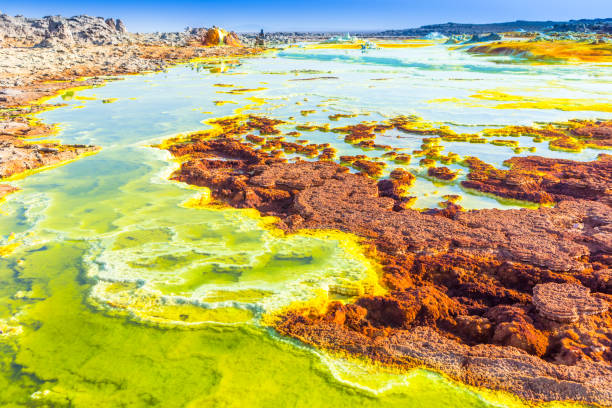
Afar Region
The Impacts of EORE provided in the Afar Region
ERW (Explosive remnants of war) remain a threat, posing a lasting hazard to civilians across the Afar region, even after hostilities cease. Children, in particular, have a heightened vulnerability to unexploded ordnance due to low-risk awareness and high inquisitiveness. Due to this reason, parents always live in fear.
EORE (Explosive Ordinance Risk Education) has had far-reaching implications in communities like the ones in the Afar region that are proximate to explosive remnants of war (ERW). The education has changed three major spheres.
- Physical Security Sphere (lifesaving, humanitarian mine action which prevents or precludes people losing their lives or being maimed by explosive remnants of war). It has also an indirect impact on economic and spheres
- Economic Sphere (freeing up of land holds transformative power to increase economic opportunities for people.
- Social Sphere (access to education and health, as well as social cohesion).
Previous Activities
- To ensure the aforementioned changes in sphere, EORE was provided in the Afar region by EPSS through a project in the past two years. The project was implemented in Zone 5 of the region with the support from EHF, the government of Japan.
- The education in the project was provided for adults, youngsters, IDP, returnees and other members of the community. Thus, face-to–face education was given to 10,866 beneficiaries. In addition, risk education was provided for 230 community volunteer focal points from different parts of the society. Furthermore, leaflets were distributed and key messages were sent to the community to be cautious. Here, working with community was ensured through Radio as well.
Current Activity
- Currently, there are numerous causalities in the Afar region due to explosive ordnance. Taking this fact in to account, EORE is being given by EPSS. The project is being implemented in Zones 1(Awsi), Zone 2(Kilbati), Zone 5 (Hari) of the region with the support from the government of Japan and is being managed by UNMAS. Thus, about 6000 individuals are being taught, including internally displaced persons, returnees and local communities.